


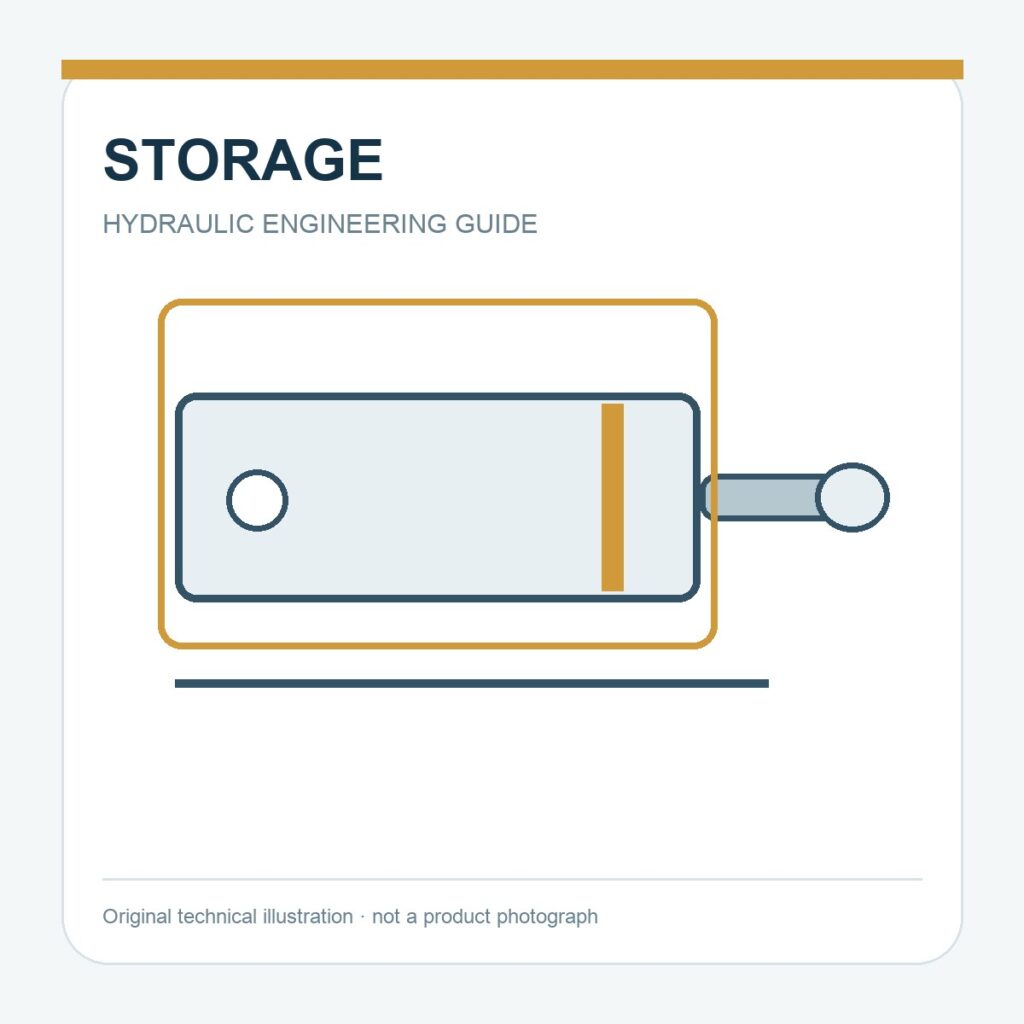
A spare cylinder may spend months between delivery and commissioning. Poor storage can leave corrosion on the rod, damaged seals or contamination inside the ports before the first operating cycle. Preservation requirements should therefore be part of the purchasing and handover plan, especially for marine, offshore and remote projects.
Start with the supplier’s product-specific instructions
There is no universal storage orientation. Parker publications for different cylinder families give different recommendations, including rod-up for some industrial models and rod-down for some mobile cylinders. The approved manufacturer instruction takes priority. Ask for it with the shipment, particularly when a cylinder is filled with preservation fluid or must be stored longer than initially planned.
Control the storage environment
Use a clean, dry, protected area away from rain, salt spray, grinding dust and heavy traffic. Support the cylinder securely so its weight is carried by appropriate points, not the exposed rod or small fittings. Leave the factory port closures in place until installation. Protect the rod from impact; even a small nick can damage a seal when the cylinder cycles.
Record the preservation state
At receipt, photograph the packing, port caps, rod, coating and nameplate. Record any supplier-applied inhibitor or internal fluid, and ask whether it is compatible with the machine’s final hydraulic fluid. If a cylinder is stored full of oil, temperature changes can expand the fluid and raise internal pressure; follow the manufacturer’s venting or protection method. Do not loosen a plug on a pressurized cylinder casually.
Inspection before commissioning
- Check for shipping damage, corrosion, loose plugs and missing identification.
- Confirm that the rod surface and exposed interfaces meet the supplier’s acceptance criteria.
- Review the preservation period and any required seal inspection or fluid flushing.
- Clean external connections before removing caps; prevent dirt entry during installation.
- Verify the mounting, hoses, relief protection and controlled first movement using the project procedure.
Long storage should trigger a documented re-inspection rather than an assumption that a factory test report is still sufficient. Our factory acceptance guide explains what to preserve in the handover record; our marine corrosion guide addresses exposure after installation.
References: Parker cylinder safety and storage guidance; Parker mobile cylinder storage and installation guidance. Cover: original schematic illustration.