


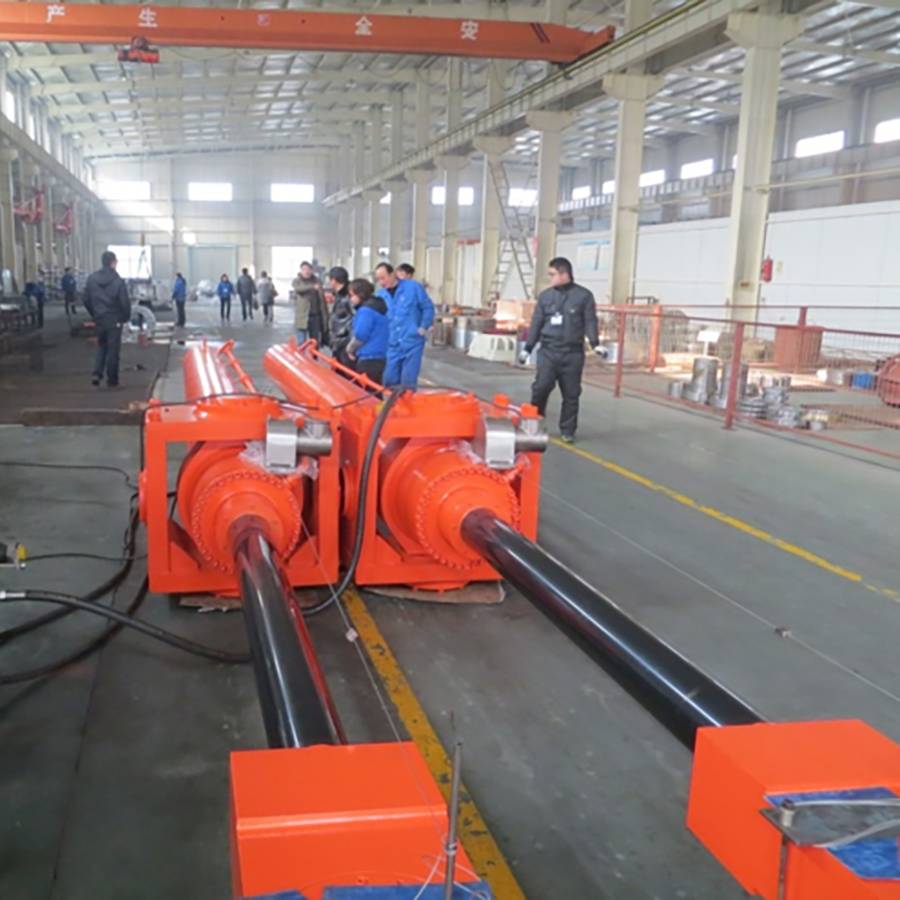
The difference between single-acting and double-acting cylinders is how many directions are powered by hydraulic pressure. A single-acting cylinder uses pressure for one direction and another force for return. A double-acting cylinder uses pressure for both extension and retraction. The best choice depends on how the load must move and how it must be controlled.
Single-acting: powered one way
A single-acting cylinder normally has one working port. When oil enters, the piston or plunger moves in its powered direction. A spring, gravity or the applied load moves it back after pressure is released. This arrangement can suit a simple lift or clamp where the return force is available and its timing is acceptable. It should not be assumed that every single-acting cylinder is spring-return; the return mechanism is part of the specification.
Double-acting: powered both ways
A double-acting cylinder has a port for each chamber. A directional valve sends oil to one side while allowing oil to leave the other. This gives hydraulic control over extension and retraction, useful when a machine must push and pull or return under a variable load. The rod-end effective area is smaller than the full piston area, so extension and retraction force or speed can differ at the same pressure or flow.
Compare the complete circuit
Count the ports, but also inspect the pump, valve, hose routing, load-holding requirements and emergency behavior. A vertical load may need engineered holding and controlled lowering regardless of cylinder type. Consider whether the return force remains available across the entire stroke and whether the machine needs repeatable movement in both directions. Do not disconnect a port or change valve plumbing to make one type behave like the other without an approved circuit design.
Questions for a supplier
Provide the load direction, required travel, pressure, return method, speed, mounting and duty cycle. If replacing a unit, send a circuit diagram and photos of both port connections. Yongjian’s страница «Прессовый цилиндр» illustrates why return motion must be specified, and the cylinder RFQ checklist lists the remaining inputs.
Техническая справка: Enerpac single-acting and double-acting cylinder guide. Приведенное выше пояснение составлено независимо в целях общего ознакомления; окончательные расчетные значения требуют рассмотрения с учетом конкретного проекта.