


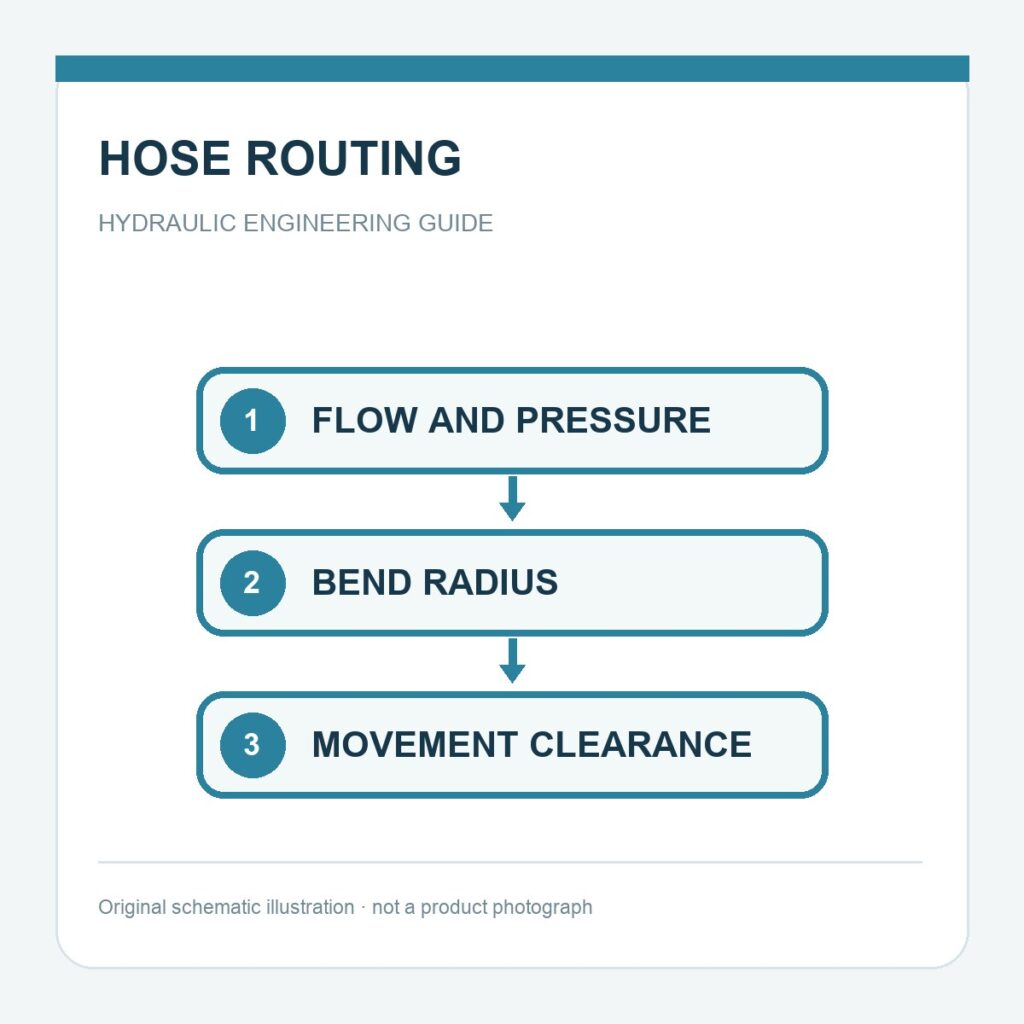
A hose assembly that fits a stationary drawing may rub, kink or pull on its fittings as the cylinder moves. Routing must be checked in the retracted, intermediate and extended positions and through the machine’s full articulation.
Size the assembly as a moving component
Select hose inside diameter from peak flow and acceptable pressure loss, then verify the working pressure, fluid and temperature rating of the complete hose-and-fitting assembly. Parker’s hydraulic hose guidance calls out bend radius, pressure surges and possible length change under pressure. The minimum bend radius belongs to the selected hose size and construction; it should not be guessed from how easily a hose feels when bent by hand.
Contrôles techniques
- Draw the hose path at every extreme machine position.
- Keep bends away from the coupling and within the rated minimum radius.
- Allow movement without snagging, rubbing or twisting the assembly.
- Protect exposed sections from abrasion, hot surfaces and falling objects.
- Check fitting access and the effect of pressure pulses on restraint.
Une erreur courante à éviter
Using a larger hose without rechecking bend radius and support space can make routing worse. A hose that contacts a sharp bracket may fail early even when its pressure rating is adequate.
Informations à fournir lors d'une demande de renseignements
- Cylinder port standard and orientation.
- Peak flow, pressure, fluid and temperature.
- Movement envelope and route drawing.
- Required guards, clamps and inspection access.
Validate the final routing on the assembled machine with slow, controlled motion before normal operation. For related selection guidance, see our cylinder port sizing guide.
Références techniques : Parker hydraulic hose installation guidance; Parker hose technical handbook. Couverture : schéma conceptuel original, et non une photo du produit.