


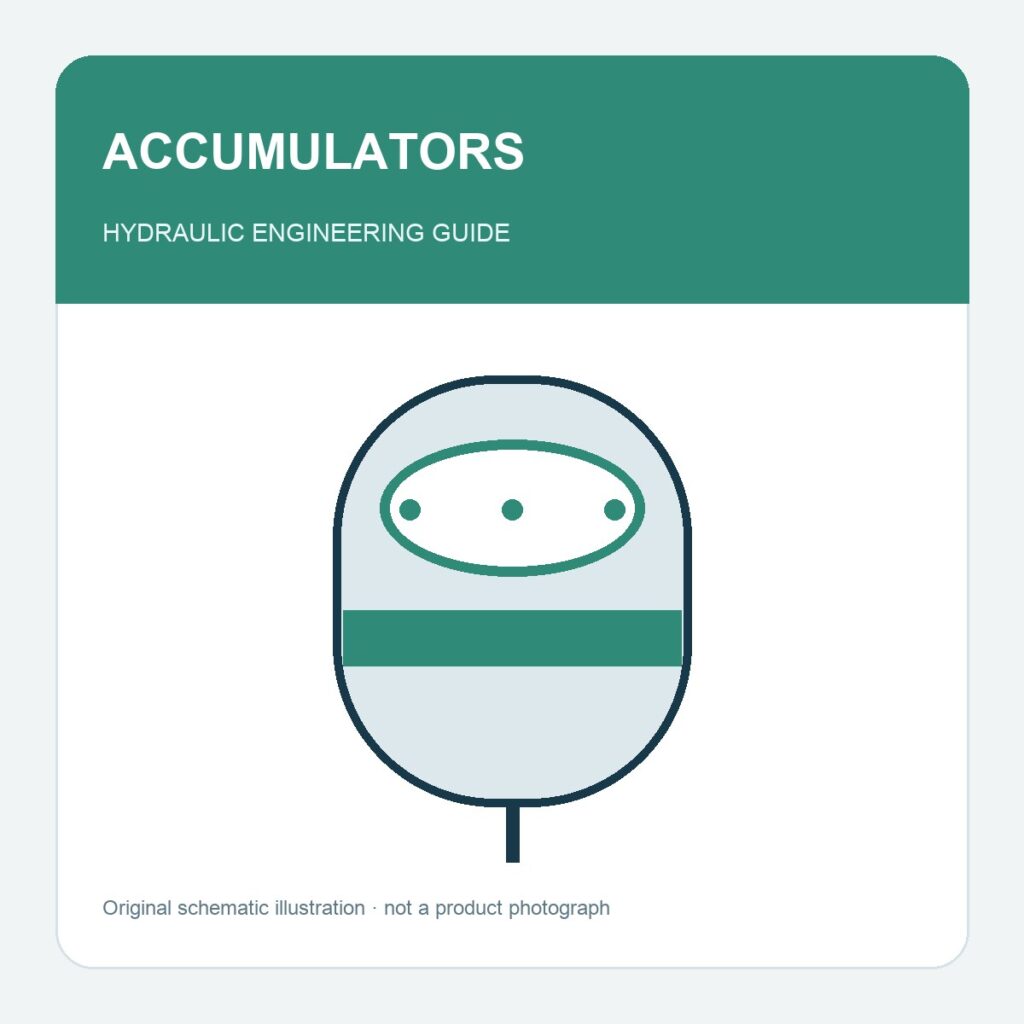
A hydraulic accumulator stores energy by admitting pressurized oil against a precharged gas volume. It can supply short bursts of flow, make up leakage or help absorb a transient, depending on the circuit. It is also a pressure vessel that can retain energy after the pump is switched off, so selection and maintenance need a documented plan.
Define the function first
An accumulator for emergency movement, peak-flow support or pulsation damping can require different sizing and connection details. State the usable oil volume that must be delivered, the maximum charging pressure, the minimum useful operating pressure and the time over which oil must flow. HYDAC identifies these pressures, gas volume and deliverable oil volume as core sizing inputs.
Why precharge matters
Gas precharge is the gas-side pressure before the hydraulic side is pressurized. As system pressure rises above precharge, oil enters and compresses the gas. When system pressure falls, the gas expands and returns oil to the circuit. An incorrect precharge can reduce usable volume or damage internal components. Temperature changes gas pressure, so an installation expected to operate through wide ambient conditions should be checked at its cold and hot extremes.
Selection is more than a volume figure
Choose bladder, piston or diaphragm construction according to flow, pressure range, mounting, maintenance and fluid compatibility. Verify the manufacturer’s pressure and temperature ratings, connection flow capacity and local pressure-vessel requirements. A schematic should show isolation, pressure relief, safe discharge and a way to verify zero hydraulic pressure before service. Only trained personnel should check or adjust precharge using the manufacturer’s procedure and specified gas.
RFQ checklist
- Application function and required usable oil volume at minimum pressure.
- Maximum and minimum system pressure, duty frequency and flow rate.
- Ambient and oil-temperature range, fluid identity and cleanliness target.
- Available installation space, orientation and service access.
- Isolation, discharge, pressure monitoring and inspection requirements.
For the surrounding unit, see our HPU duty-cycle guide. Do not select precharge from a rule of thumb without checking the accumulator type and the manufacturer’s calculation method.
References: HYDAC hydraulic accumulator FAQ; HYDAC Accumulator Technology catalog. Cover: original conceptual schematic.