


Custom Hydraulic Power Units
Click an image to view a larger preview.
HYDRAULIC CYLINDERS
Custom hydraulic power unit concepts for port crane functions, designed from circuit, flow, pressure, duty, filtration and site environment.
For drawings or project requirements: wenyanchen778@gmail.com
A port crane hydraulic power unit must supply the required actuators and control circuit over the crane’s real operating sequence. Yongjian can review a hydraulic schematic and site requirements for a project-specific skid or enclosure. The rendered unit illustrates possible components; the delivered configuration follows approved drawings and component schedules.
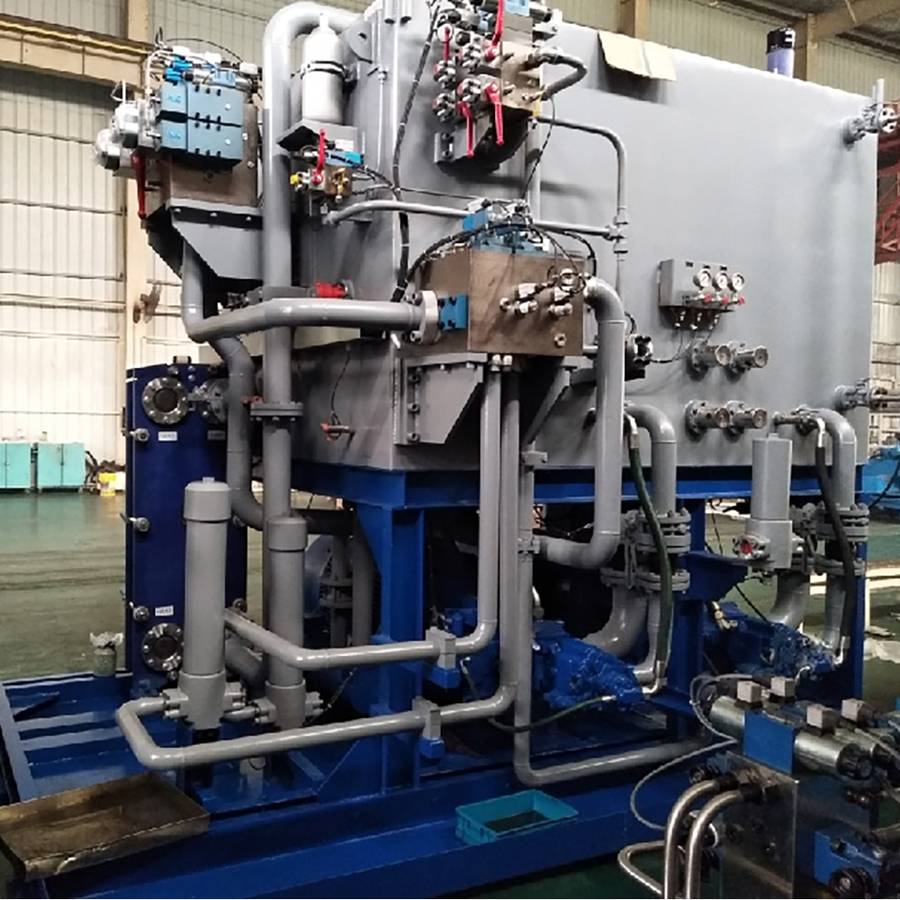
Representative photograph from the site’s existing product gallery, shown to illustrate a related hydraulic cylinder or system. It may not depict the exact configuration described on this page. Final appearance, dimensions and performance depend on the approved project drawing.
Define each crane function, simultaneous demand, pressure and flow at the operating points, motor supply, duty cycle and start-stop frequency. Include holding and emergency requirements, and identify whether redundancy or standby power is required by the project. The system designer should calculate heat generation and oil volume from the complete duty rather than choosing a reservoir by visual size.
Specify pump and motor arrangement, reservoir, manifolds, filtration, cooling, instruments, controls and service access. Salt spray, dust, humidity and temperature influence enclosure, coating and electrical protection choices. Layout should permit safe filter change, sampling, drain access and lifting or transport. Circuit interfaces and communication with the crane controller belong on the schematic.
Agree on cleanliness targets, flushing scope, pressure and functional testing, leak checks, instrument calibration, electrical interface checks, labeling, preservation and documentation. Final safety validation occurs with the crane and its control system.
Send hydraulic and electrical schematics, function sequence, pressure-flow duty, power supply, fluid, ambient conditions, installation envelope, quantity and inspection plan. State whether the unit sits in a machinery room or outdoors and how it will be lifted into position. Send drawings and project details to Yongjian for an engineering review and quotation.
A port-crane HPU should be specified against the crane’s actual luffing, slewing, hoisting, and auxiliary operating sequence. Peak demand, simultaneous functions, and idle time affect motor selection, heat rejection, and reservoir design.
Review load-holding valves, shock and relief protection, oil cleanliness, cooling-water availability, and the effect of vessel or quay vibration. Identify service clearances for filters and pumps and protect external connections from salt spray.
Provide the duty chart, hydraulic schematic, ambient conditions, electrical supply, functional safety requirements, and port or vessel approval requirements. Agree on factory function tests and documented operating settings.
Product configuration and performance are confirmed from approved project drawings; this section is application guidance.
Final technical parameters are confirmed after drawing review and operating-condition evaluation.
ENGINEERING FEATURES
TYPICAL APPLICATIONS
Yongjian supports equipment manufacturers, engineering contractors and industrial project teams with customized hydraulic cylinders for lifting, positioning and load-control functions.

CUSTOM PROJECT PROCESS
Our engineers coordinate technical review, manufacturing, inspection and delivery support around the requirements of each hydraulic project.
Confirm load, stroke, speed, environment, standards and interface requirements.
Complete hydraulic calculations, drawings, material selection and design review.
Machine, weld, heat treat, coat and assemble under documented quality controls.
Perform dimensional inspection, pressure testing, leakage testing and functional verification.
Issue inspection records, certificates, packing documents and shipment protection.
RELATED PRODUCTS
Custom Hydraulic Power Units
Offshore Hydraulic Systems
PRODUCT FAQ
Technical parameters are confirmed according to equipment drawings, load conditions and installation requirements.
Yes. We review drawings, operating conditions, standards and interfaces before confirming the manufacturing route.
Provide bore, rod diameter, stroke, pressure, load, speed, mounting, environment, quantity and drawings when available.
Yes. The scope can include pumps, valves, tanks, cooling, filtration, controls, sensors and commissioning support.
Materials and surface protection are selected according to load, corrosion, temperature, wear and specified project standards.
Test procedures can include proof pressure, leakage, movement, cushioning and functional checks according to the agreed inspection plan.
Third-party or customer inspection points can be incorporated into the agreed quality plan.
The scope may include drawings, material certificates, dimensional reports, welding records, coating records and test reports.
Packing and preservation are selected according to product size, transport mode, storage period and destination conditions.
REQUEST A QUOTE
Share your application data or drawings for an engineering review.
Share your application data or drawings for an engineering review.