


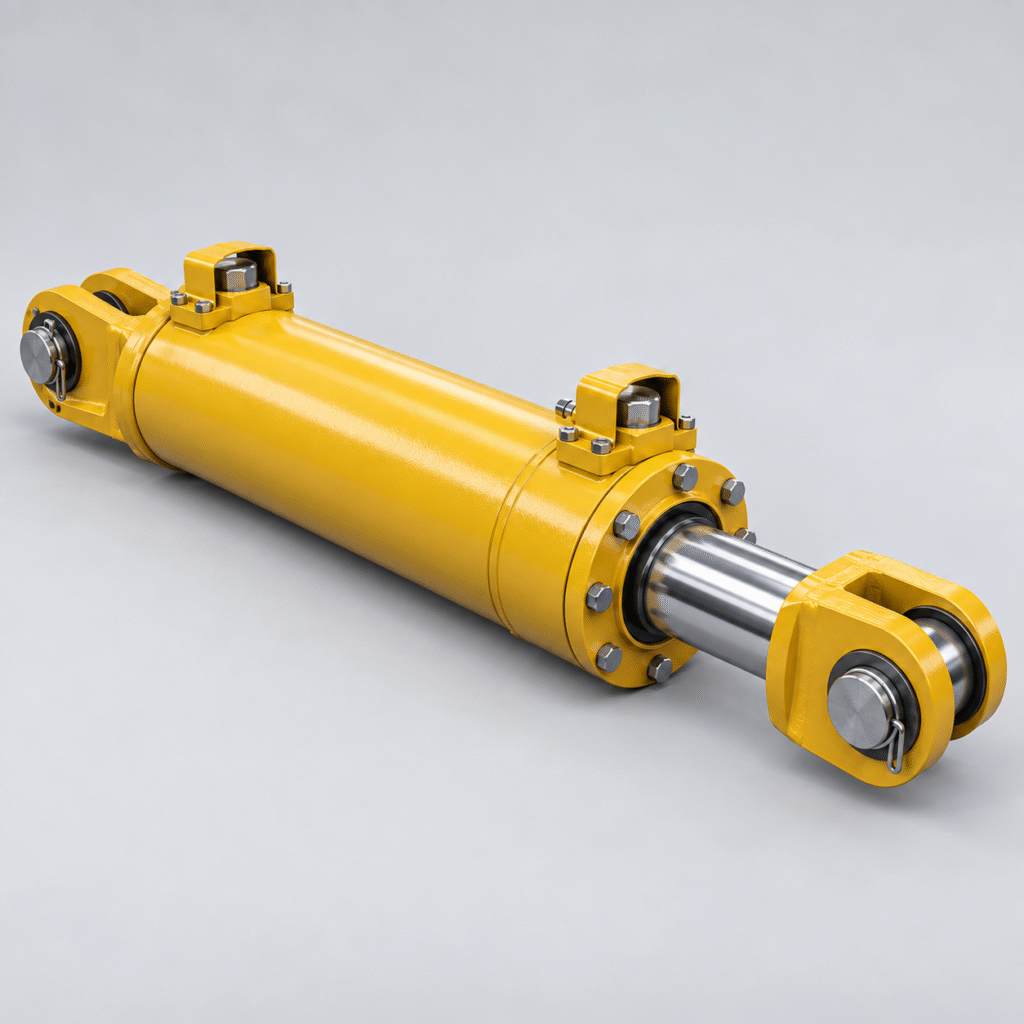
Seals keep hydraulic fluid where the circuit needs it and help protect the cylinder from the outside environment. When a seal leaks, the seal itself may be worn, but it is important to ask why. Replacing a seal without correcting contamination, surface damage or misalignment can lead to another early failure.
Know which seal is involved
A rod seal limits oil escaping along the moving rod. A piston seal limits flow between the two cylinder chambers. Static seals close joints between fixed components, while a wiper removes dirt from the rod before it reaches the gland. External oil on the rod points to a different path from a cylinder that drifts with no visible leak. The symptom should guide inspection rather than dictate a repair immediately.
Look for the source of wear
A scratched or pitted rod can abrade the rod seal. Dirt entering through a worn wiper can score the rod, bearing or bore. Side loads may squeeze a seal unevenly and create friction. Heat, pressure spikes or a fluid that is incompatible with the seal material can harden, swell or damage it. Storage conditions and assembly cleanliness also affect service life. Inspect the removed seal together with the mating surfaces and oil condition.
Match the replacement to the duty
Specify hydraulic fluid type, temperature range, pressure, speed, cycle frequency, dwell time and contamination exposure. Seal material and geometry should come from an approved design or qualified supplier recommendation. A special fluid, such as a fire-resistant medium, needs explicit compatibility confirmation. Do not substitute an apparently similar seal just because it fits a groove.
Prevent repeat failures
Check filtration, rod protection, mounting alignment, gland condition and any recurring pressure or temperature event. Document test and inspection results after repair. For a replacement cylinder, provide photos of the failed surfaces and the service history. Yongjian’s marine corrosion guide explains one environment where rod and seal choices must be considered together.
Technical reference: Parker cylinder service manual. The explanation above is independently written for general education; final design values require a project-specific review.