


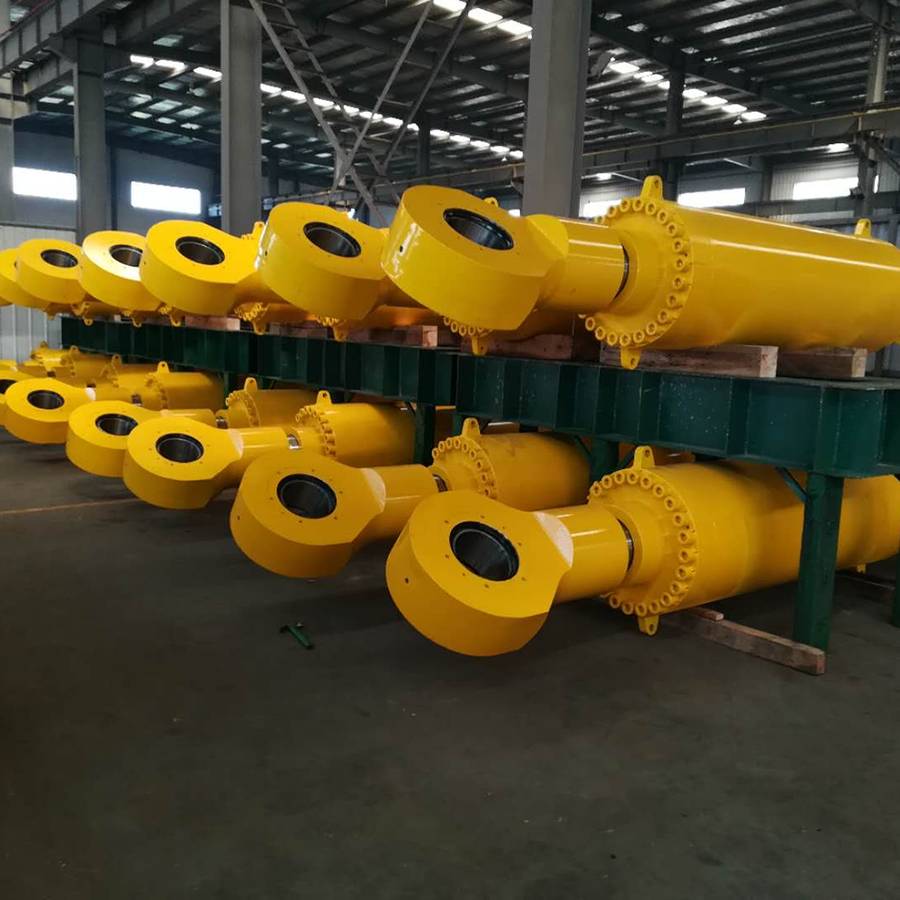
A cylinder is usually intended to push or pull along its axis. A sideways force makes the rod press harder against its gland and bearings, which can increase friction and wear. Side loading may come from a linkage, a poorly aligned mount or a load that moves on an unexpected path. It should be reviewed in the machine geometry rather than treated as a seal problem alone.
How misalignment develops
Pin centers may shift as a gate, boom or platform moves. A mount can be installed out of square, or a welded structure can distort under load. Wear in bushings can add play and change the cylinder line of action. An end connection that cannot articulate through the required angle may transfer bending into the rod. The apparent alignment at one position does not prove alignment through the full stroke.
What the damage can look like
Uneven wear on one side of a rod or bearing, repeated rod-seal leakage, scoring and jerky motion may point to a side-load issue. A bent rod or damaged pin can be a more advanced symptom. The same signs can also have other causes, including contamination or inadequate lubrication, so inspection should include the complete mechanism and oil condition.
Design around the load path
Share a linkage drawing with pin centers at key positions, expected forces and the allowed motion of each mount. Check whether a clevis, spherical bearing, trunnion or separate guide is appropriate for the machine. The cylinder should not be used as a substitute for a guide rail or structural bearing unless the design explicitly allows it. Confirm port and hose clearance at all operating angles.
When replacing a cylinder
Do not change only the seal if leakage repeatedly returns. Record worn areas, pin and bushing condition, mount dimensions and machine motion before quoting a replacement. For large equipment, include installation tolerances and inspection points. Yongjian’s offshore lifting cylinder and excavator cylinder pages describe applications where geometry needs review.
Technical reference: Parker hydraulic cylinder service and troubleshooting manual. The explanation above is independently written for general education; final design values require a project-specific review.