

Hydraulic Cylinders
Click an image to view a larger preview.
HYDRAULIC CYLINDERS
Drawing-based cylinders for rolling line adjustment and auxiliary functions, specified for force, heat, contamination and control interfaces.
For drawings or project requirements: wenyanchen778@gmail.com
Steel rolling lines use hydraulic actuation for adjustment, guidance and auxiliary movement, with different duties at each machine position. Yongjian can review an original equipment or replacement cylinder drawing to develop a project-specific configuration. The exact cylinder arrangement depends on the mill mechanism and its hydraulic control system.
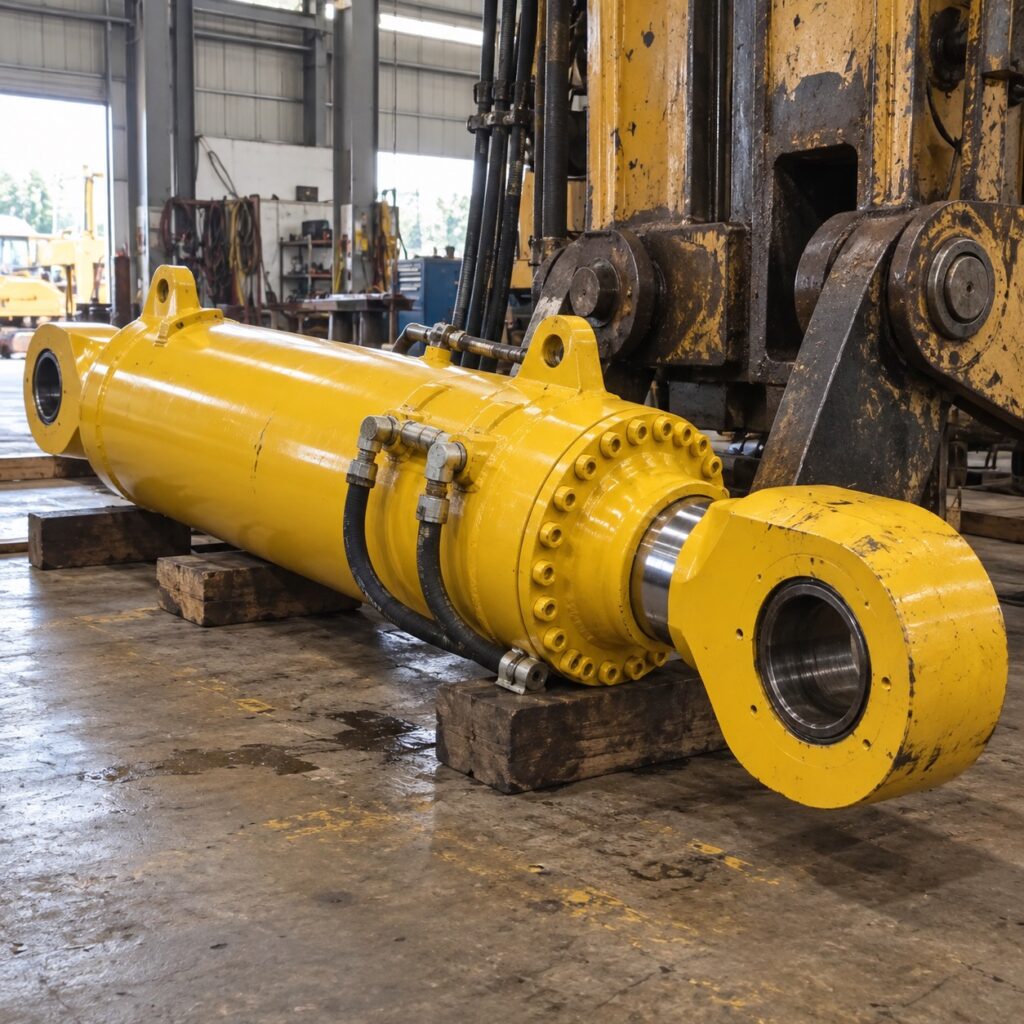
AI-assisted illustrative image based on hydraulic component references. It is not a photograph of a delivered product. Final appearance, dimensions and performance depend on the approved project drawing.
Identify the machine station, required force, stroke, positioning duty, operating and peak pressure, speed and cycle frequency. Provide the mounting drawing and describe thermal exposure, scale, water spray, vibration and impact. Check whether the machine structure guides the moving member or the cylinder is exposed to side load. Replacement requests should include failure history and measured interfaces.
Confirm bore, rod, mount style, ports, seals, wipers, wear rings and rod treatment for the reported duty. Feedback and low-friction sealing may be relevant to controlled adjustment, but must be matched to the complete valve and controller. Plan shielding or routing where heat, scale or water can reach hoses and gland components.
Set inspection points for mounting fit, stroke, pressure and leakage, sensor operation if specified, and exterior protection. Define final test values in the drawing or inspection plan. Agree on identification and spare-part information for mill maintenance teams.
Send equipment function, original drawings, load and motion profiles, hydraulic schematic, pressure, fluid, heat and contamination exposure, quantity and required records. A photograph of the installed hose and guard arrangement helps confirm clearance for maintenance. Send drawings and project details to Yongjian for an engineering review and quotation.
Rolling-line actuators may perform adjustment, clamping, guidance, or auxiliary movement. Each function has a different force history and response requirement, so a single “steel mill cylinder” specification is insufficient.
Document pressure transients, cycle frequency, alignment, scale and water exposure, and sensor requirements. Distinguish the cylinder’s axial duty from side loads that should be carried by machine guides. Allow maintenance access for pins, rod seals, and hoses.
Supply the station name, machine drawing, load and speed profile, oil type, ambient and process temperatures, and existing failure mode. Confirm final dimensions and test pressure from the approved replacement specification.
Product configuration and performance are confirmed from approved project drawings; this section is application guidance.
Final technical parameters are confirmed after drawing review and operating-condition evaluation.
ENGINEERING FEATURES
TYPICAL APPLICATIONS
Yongjian supports equipment manufacturers, engineering contractors and industrial project teams with customized hydraulic cylinders for lifting, positioning and load-control functions.

CUSTOM PROJECT PROCESS
Our engineers coordinate technical review, manufacturing, inspection and delivery support around the requirements of each hydraulic project.
Confirm load, stroke, speed, environment, standards and interface requirements.
Complete hydraulic calculations, drawings, material selection and design review.
Machine, weld, heat treat, coat and assemble under documented quality controls.
Perform dimensional inspection, pressure testing, leakage testing and functional verification.
Issue inspection records, certificates, packing documents and shipment protection.
RELATED PRODUCTS
Hydraulic Cylinders
Hydraulic Cylinders

Hydraulic Cylinders
PRODUCT FAQ
Technical parameters are confirmed according to equipment drawings, load conditions and installation requirements.
Yes. We review drawings, operating conditions, standards and interfaces before confirming the manufacturing route.
Provide bore, rod diameter, stroke, pressure, load, speed, mounting, environment, quantity and drawings when available.
Yes. The scope can include pumps, valves, tanks, cooling, filtration, controls, sensors and commissioning support.
Materials and surface protection are selected according to load, corrosion, temperature, wear and specified project standards.
Test procedures can include proof pressure, leakage, movement, cushioning and functional checks according to the agreed inspection plan.
Third-party or customer inspection points can be incorporated into the agreed quality plan.
The scope may include drawings, material certificates, dimensional reports, welding records, coating records and test reports.
Packing and preservation are selected according to product size, transport mode, storage period and destination conditions.
REQUEST A QUOTE
Share your application data or drawings for an engineering review.
Share your application data or drawings for an engineering review.