

Hydraulic Cylinders
Click an image to view a larger preview.
HYDRAULIC CYLINDERS
Custom mast positioning cylinders for rotary drilling rigs, specified from linkage geometry, transport loads, site contamination and hydraulic duty.
For drawings or project requirements: wenyanchen778@gmail.com
A rotary drilling rig mast cylinder may raise, lower or position the mast through a changing linkage. Yongjian can review drawings for new machines or replacement actuators and prepare a custom configuration for approval. A nominal cylinder bore or machine weight is not enough to establish the loads at every mast angle.
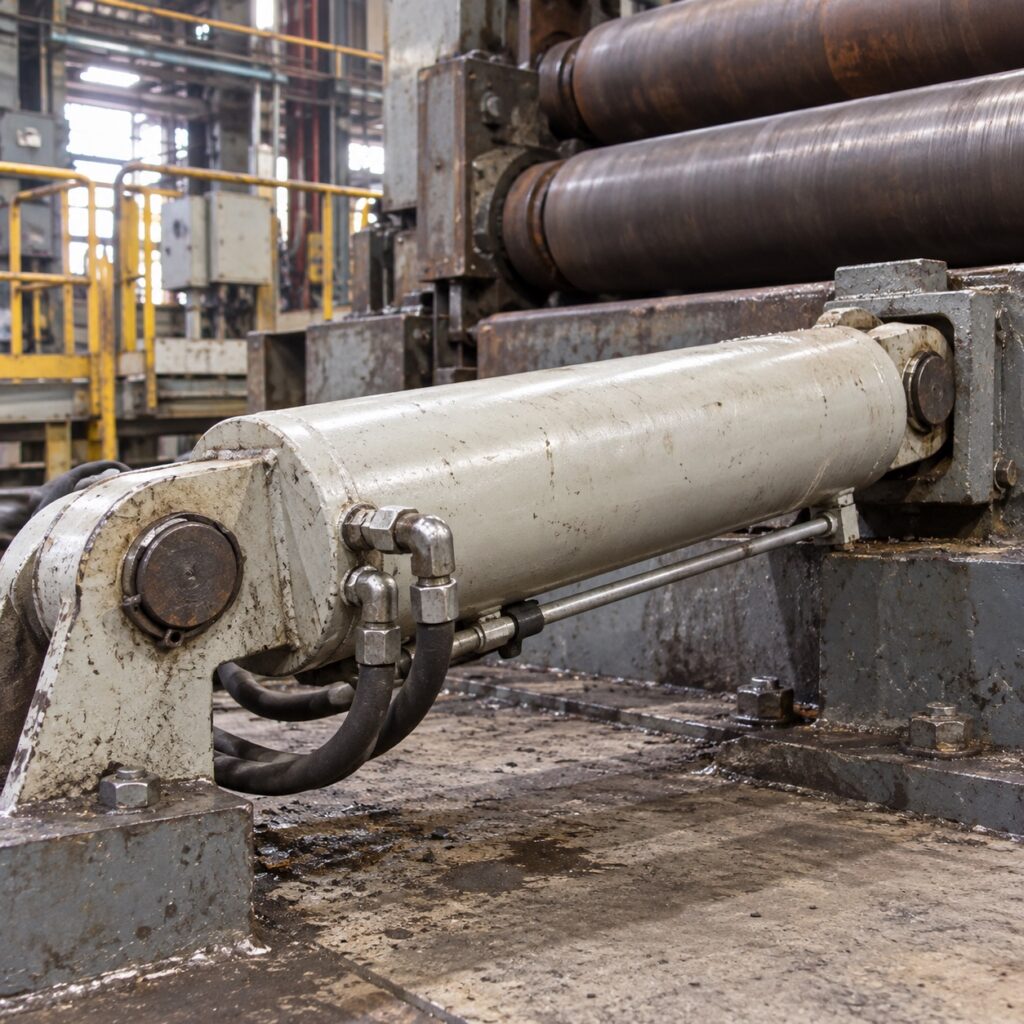
AI-assisted illustrative image based on hydraulic component references. It is not a photograph of a delivered product. Final appearance, dimensions and performance depend on the approved project drawing.
Provide mast mass and attachments, pivot geometry, pin-center positions, stroke, transport and operating conditions, movement time and hydraulic pressure. Review the most demanding compression and tension cases, rod stability and clearances throughout the motion. Identify any loads from vibration, shocks, wind or uneven ground considered by the machine designer. The equipment manufacturer defines machine stability and holding requirements.
Bore, rod size, mount pins, bushings, ports, cushioning, seals and rod protection can be specified to the mechanism. Outdoor dust, mud, water and temperature affect wipers, coatings and maintenance intervals. Check hose routing and protection as the mast moves; position indication and holding-valve interfaces require an agreed circuit design.
Confirm mounting dimensions, full stroke, pressure and leakage tests, surface finish, marking, preservation and any functional checks. For replacement work, verify machine model, serial range and original revision before claiming interchangeability.
Send rig and linkage drawings, mast load cases, stroke, closed and extended lengths, mount dimensions, pressure, fluid, environment, quantity and test requirements. Photographs of pin wear or rod damage can help identify recurring site issues. Send drawings and project details to Yongjian for an engineering review and quotation.
Mast geometry changes the cylinder force requirement as the rig raises or lowers. The design should use force cases at several angles, including the transition near transport and working positions.
Check rod compression and buckling at maximum extension, pin-bearing loads, cylinder articulation, hose movement, and end-stop energy. Define how the mast is restrained during transport and how unintended descent is prevented during hose or power failure.
Send mast and linkage drawings, rig mass distribution, stroke, operating time, pressure, mounting interfaces, and field environment. Request dimensional drawings and test criteria matched to the approved machine design.
Product configuration and performance are confirmed from approved project drawings; this section is application guidance.
Final technical parameters are confirmed after drawing review and operating-condition evaluation.
ENGINEERING FEATURES
TYPICAL APPLICATIONS
Yongjian supports equipment manufacturers, engineering contractors and industrial project teams with customized hydraulic cylinders for lifting, positioning and load-control functions.

CUSTOM PROJECT PROCESS
Our engineers coordinate technical review, manufacturing, inspection and delivery support around the requirements of each hydraulic project.
Confirm load, stroke, speed, environment, standards and interface requirements.
Complete hydraulic calculations, drawings, material selection and design review.
Machine, weld, heat treat, coat and assemble under documented quality controls.
Perform dimensional inspection, pressure testing, leakage testing and functional verification.
Issue inspection records, certificates, packing documents and shipment protection.
RELATED PRODUCTS
Hydraulic Cylinders
Hydraulic Cylinders

Hydraulic Cylinders
PRODUCT FAQ
Technical parameters are confirmed according to equipment drawings, load conditions and installation requirements.
Yes. We review drawings, operating conditions, standards and interfaces before confirming the manufacturing route.
Provide bore, rod diameter, stroke, pressure, load, speed, mounting, environment, quantity and drawings when available.
Yes. The scope can include pumps, valves, tanks, cooling, filtration, controls, sensors and commissioning support.
Materials and surface protection are selected according to load, corrosion, temperature, wear and specified project standards.
Test procedures can include proof pressure, leakage, movement, cushioning and functional checks according to the agreed inspection plan.
Third-party or customer inspection points can be incorporated into the agreed quality plan.
The scope may include drawings, material certificates, dimensional reports, welding records, coating records and test reports.
Packing and preservation are selected according to product size, transport mode, storage period and destination conditions.
REQUEST A QUOTE
Share your application data or drawings for an engineering review.
Share your application data or drawings for an engineering review.