


Hydraulic Cylinders
Click an image to view a larger preview.
HYDRAULIC CYLINDERS
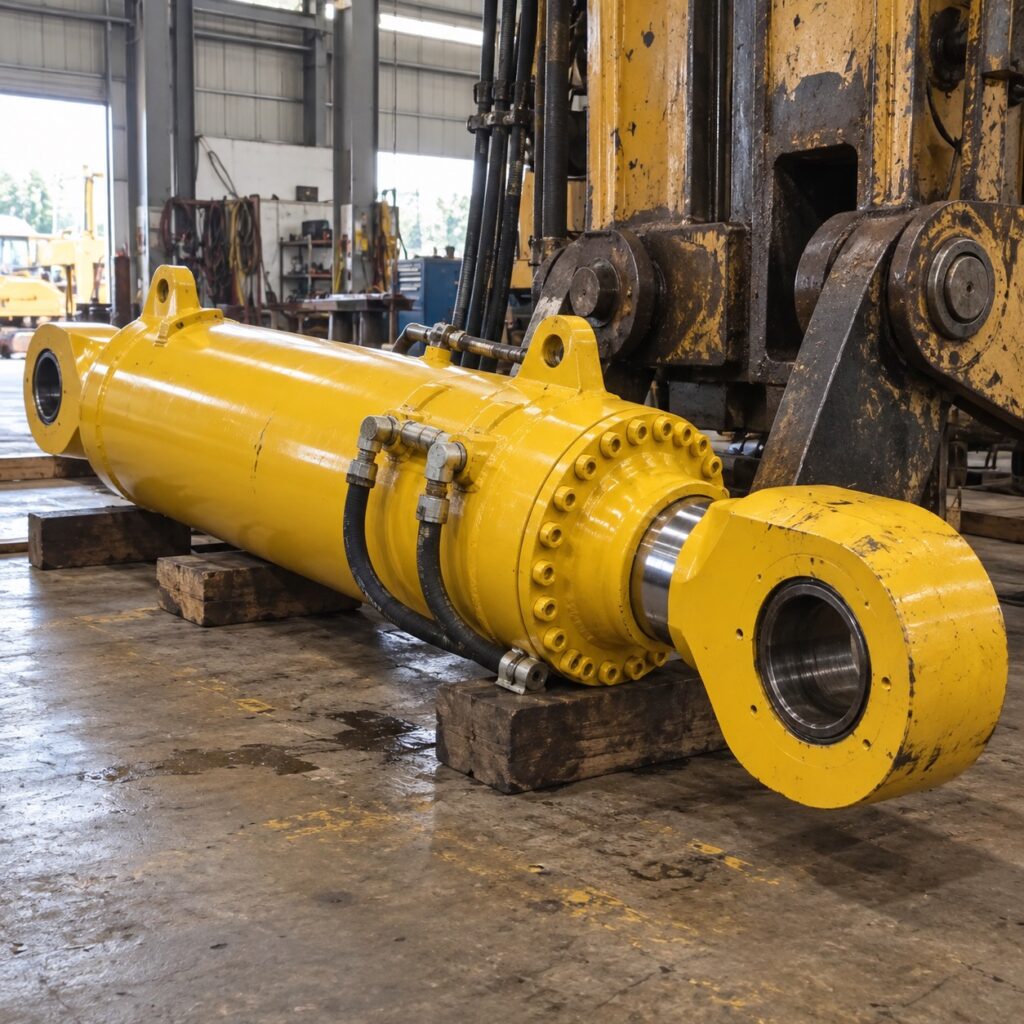
Custom hydraulic cylinders for dredger spud lifting systems, developed from spud load, stroke, mounting geometry and marine service conditions.
For drawings or project requirements: wenyanchen778@gmail.com
A dredger spud lifting actuator works near water, sediment and deck equipment, often with long travel and challenging maintenance access. Yongjian can review the spud arrangement and vessel duty for a custom cylinder or a replacement unit. The final arrangement is confirmed from an approved drawing and hydraulic specification.
AI-assisted illustrative image based on hydraulic component references. It is not a photograph of a delivered product. Final appearance, dimensions and performance depend on the approved project drawing.
State the spud mass, lifting resistance, vessel operating modes, required lift speed and full travel. Include pin-to-pin geometry, allowable envelope, guides and any side forces caused by misalignment or vessel motion. The spud guidance structure should carry transverse loads; the cylinder design review should identify compression and buckling cases where relevant. Define how the spud is held during a power loss.
Specify the mounting ends, rod diameter, bore, stroke, port positions, cushioning and any sensor interface around the vessel’s hydraulic system. Discuss salt spray, immersion risk, silt, temperature and coating maintenance. Rod surface, wiper and seal choices should reflect the real exposure and compatible hydraulic fluid. Design service access for gland inspection and cylinder removal.
A project inspection plan may include interface measurements, pressure and leakage checks, travel checks, coating inspection, preservation and records. Acceptance pressures and limits must be agreed in the purchase specification. Vessel-level holding and control functions require commissioning with the complete system.
Send vessel and spud drawings, lifting load cases, stroke, retracted length, mounts, operating pressure and flow, fluid, environment, duty cycle, quantity and inspection requirements. Send drawings and project details to Yongjian for an engineering review and quotation.
A spud-lift cylinder may see abrasion, splash water, shock, and a wide change in load as the spud is raised or lowered. The lifting mechanism and guides should be assessed together.
Review spud mass, friction, allowable travel speed, mechanical stops, pin reactions, hose routing, and rod exposure. Define how the spud is held during maintenance or a hydraulic failure. Inspectability matters where access is constrained on deck.
Send the spud and guide drawings, required stroke, duty cycle, pressure, fluid, environmental exposure, and any existing-cylinder record. Final dimensions and coatings should be confirmed on the vessel’s approved arrangement.
Product configuration and performance are confirmed from approved project drawings; this section is application guidance.
Final technical parameters are confirmed after drawing review and operating-condition evaluation.
ENGINEERING FEATURES
TYPICAL APPLICATIONS
Yongjian supports equipment manufacturers, engineering contractors and industrial project teams with customized hydraulic cylinders for lifting, positioning and load-control functions.

CUSTOM PROJECT PROCESS
Our engineers coordinate technical review, manufacturing, inspection and delivery support around the requirements of each hydraulic project.
Confirm load, stroke, speed, environment, standards and interface requirements.
Complete hydraulic calculations, drawings, material selection and design review.
Machine, weld, heat treat, coat and assemble under documented quality controls.
Perform dimensional inspection, pressure testing, leakage testing and functional verification.
Issue inspection records, certificates, packing documents and shipment protection.
RELATED PRODUCTS
Hydraulic Cylinders
Hydraulic Cylinders
Hydraulic Cylinders
PRODUCT FAQ
Technical parameters are confirmed according to equipment drawings, load conditions and installation requirements.
Yes. We review drawings, operating conditions, standards and interfaces before confirming the manufacturing route.
Provide bore, rod diameter, stroke, pressure, load, speed, mounting, environment, quantity and drawings when available.
Yes. The scope can include pumps, valves, tanks, cooling, filtration, controls, sensors and commissioning support.
Materials and surface protection are selected according to load, corrosion, temperature, wear and specified project standards.
Test procedures can include proof pressure, leakage, movement, cushioning and functional checks according to the agreed inspection plan.
Third-party or customer inspection points can be incorporated into the agreed quality plan.
The scope may include drawings, material certificates, dimensional reports, welding records, coating records and test reports.
Packing and preservation are selected according to product size, transport mode, storage period and destination conditions.
REQUEST A QUOTE
Share your application data or drawings for an engineering review.
Share your application data or drawings for an engineering review.