


Hydraulic Cylinders
Click an image to view a larger preview.
HYDRAULIC CYLINDERS
Large-bore cylinders for multi-point heavy lifting projects, configured from load distribution, stroke, support geometry and control requirements.
For drawings or project requirements: wenyanchen778@gmail.com
Multi-point lifting of a bridge element, industrial structure or large machine requires coordinated movement and a clear load path. Yongjian can review cylinder drawings and lifting duty for large-bore actuators, while the lifting contractor or system integrator defines the full control and safety method. This is a project-specific product concept rather than a standard lifting capacity claim.
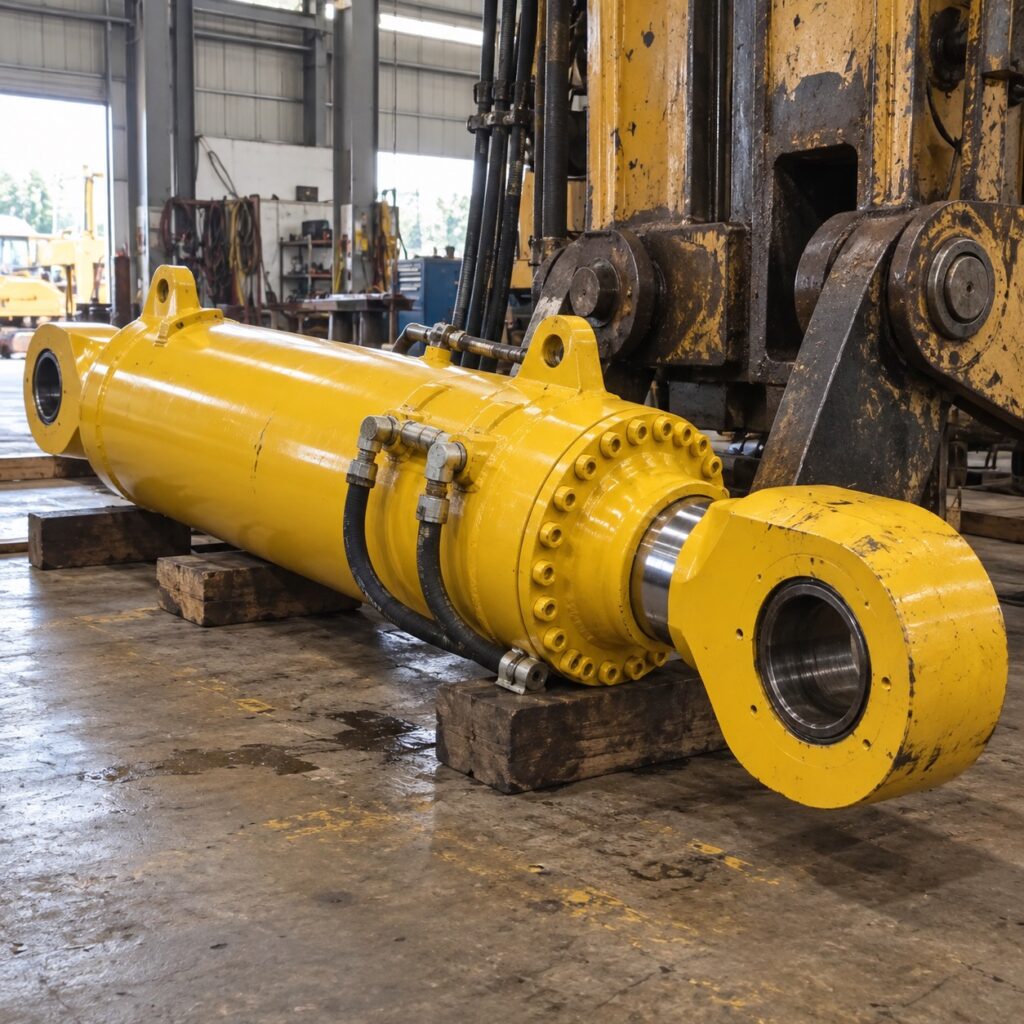
AI-assisted illustrative image based on hydraulic component references. It is not a photograph of a delivered product. Final appearance, dimensions and performance depend on the approved project drawing.
Calculate the load at each lifting point, uneven-load cases, allowable differential travel and support settlement. Provide required stroke, installed height, travel speed and expected number of cycles. Review rod stability, bearing loads, base support and the effect of side loading. The structure and jacking frame must be designed for all operating and abnormal conditions.
Cylinder interface choices include base or flange support, rod-end connection, bore and rod size, hydraulic ports and any position or pressure feedback. A synchronized hydraulic system may use measured position and flow control, but actuator selection alone does not establish synchronization accuracy. State oil cleanliness, outdoor exposure, temperature and protection requirements.
Agree on dimensions, proof or pressure tests, leakage, sensor checks if applicable, marking, preservation and traceable documentation. Define hold points and witnessed testing in the purchase order when needed. The complete lift plan should specify monitoring, stop conditions and safe lowering.
Send point loads, lift sequence, stroke, installed envelope, pressure and flow, mounts, fluid, environment, number of cylinders, feedback needs and acceptance plan. Send drawings and project details to Yongjian for an engineering review and quotation.
Large-bore lifting cylinders must be reviewed as part of a multi-point system. The mass of the structure, center of gravity, support stiffness, and permitted differential movement determine each actuator’s load case.
Set allowable lift skew and measure position at every point. Review pressure relief, isolation, load holding, hose failure response, and mechanical support during pauses. Confirm that lateral loads are taken by the lifting structure, not the rods.
Send the lift plan, load distribution, stroke, minimum closed height, pressure limit, electrical and control interfaces, and witness-test requirements. Cylinder capacity and test conditions are finalized from the approved engineering package.
Product configuration and performance are confirmed from approved project drawings; this section is application guidance.
Final technical parameters are confirmed after drawing review and operating-condition evaluation.
ENGINEERING FEATURES
TYPICAL APPLICATIONS
Yongjian supports equipment manufacturers, engineering contractors and industrial project teams with customized hydraulic cylinders for lifting, positioning and load-control functions.

CUSTOM PROJECT PROCESS
Our engineers coordinate technical review, manufacturing, inspection and delivery support around the requirements of each hydraulic project.
Confirm load, stroke, speed, environment, standards and interface requirements.
Complete hydraulic calculations, drawings, material selection and design review.
Machine, weld, heat treat, coat and assemble under documented quality controls.
Perform dimensional inspection, pressure testing, leakage testing and functional verification.
Issue inspection records, certificates, packing documents and shipment protection.
RELATED PRODUCTS
Hydraulic Cylinders
Hydraulic Cylinders
Hydraulic Cylinders
PRODUCT FAQ
Technical parameters are confirmed according to equipment drawings, load conditions and installation requirements.
Yes. We review drawings, operating conditions, standards and interfaces before confirming the manufacturing route.
Provide bore, rod diameter, stroke, pressure, load, speed, mounting, environment, quantity and drawings when available.
Yes. The scope can include pumps, valves, tanks, cooling, filtration, controls, sensors and commissioning support.
Materials and surface protection are selected according to load, corrosion, temperature, wear and specified project standards.
Test procedures can include proof pressure, leakage, movement, cushioning and functional checks according to the agreed inspection plan.
Third-party or customer inspection points can be incorporated into the agreed quality plan.
The scope may include drawings, material certificates, dimensional reports, welding records, coating records and test reports.
Packing and preservation are selected according to product size, transport mode, storage period and destination conditions.
REQUEST A QUOTE
Share your application data or drawings for an engineering review.
Share your application data or drawings for an engineering review.