


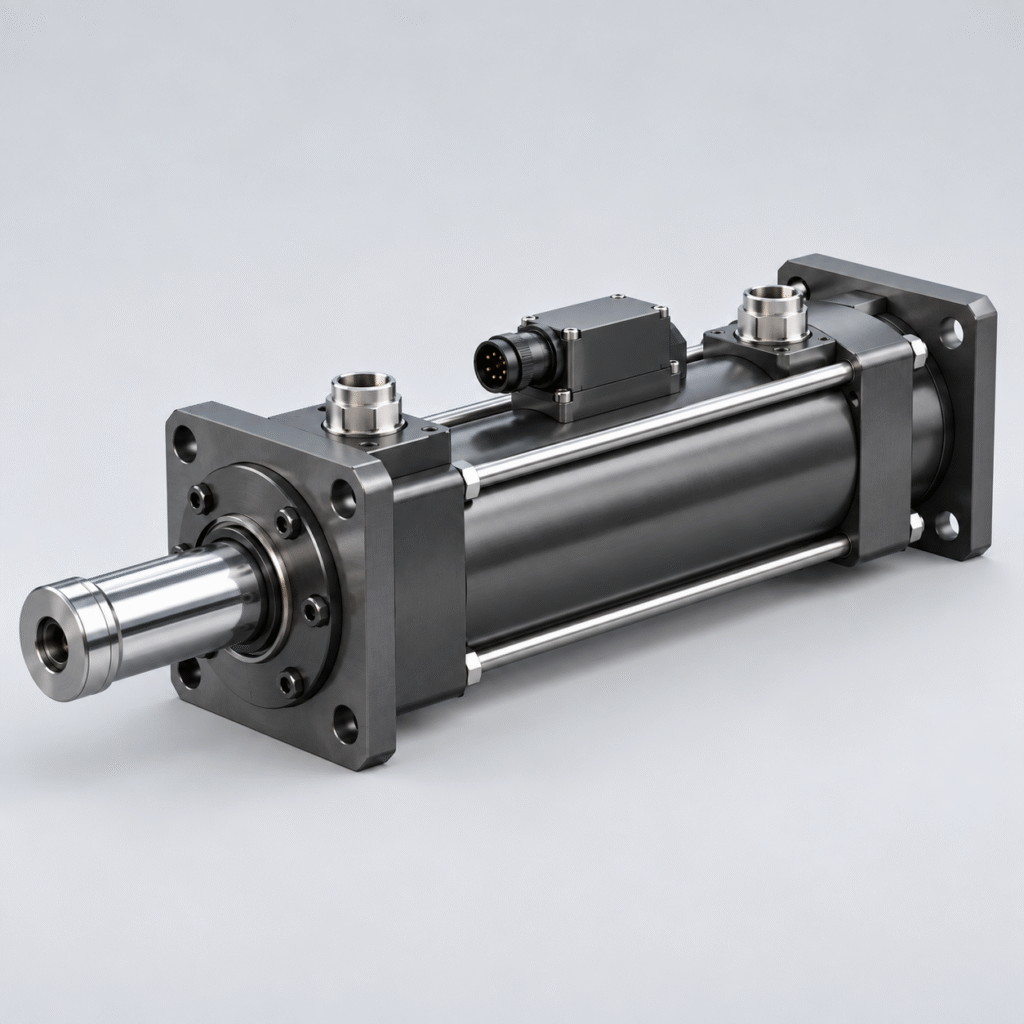
A hydraulic cylinder cushion reduces the speed of a moving piston as it approaches an end of stroke. It helps manage the energy that otherwise creates a hard stop, noise and pressure shock. Cushioning is useful in some applications, but it must be matched to mass, speed, load direction and the circuit. A cushion is not a substitute for a machine’s safety stops or load-holding design.
How a built-in cushion works
Near the end of travel, a cushion feature restricts the path for oil leaving the chamber. The oil can still escape through a smaller metered route, so the piston decelerates. Some designs use an adjustable needle valve; others use a shaped spear, sleeve or fixed orifices. The reverse stroke needs an appropriate path so the cylinder can start moving away from the end position. The exact construction varies by manufacturer.
Why one setting does not suit every load
A heavy moving mass stores more kinetic energy than a light one at the same speed. Higher speed increases the energy that must be managed. Gravity can add or oppose the motion on an incline or vertical axis. A cushion that is too restrictive may raise pressure or slow a cycle more than intended; one that is too open may leave a hard impact. The pressure and flow available from the rest of the circuit affect the result.
What to specify
Tell the supplier whether cushioning is needed at the cap end, rod end or both. Provide moving mass, speed near the end position, orientation, load direction, pressure, oil type and temperature range. Describe how often the cylinder reaches full stroke and whether an external control already decelerates it. Agree on a test method for the complete machine, because the interaction with valves and structure determines the observed stop.
When to inspect
A new end-of-stroke knock, longer cycle time or abnormal pressure peak calls for investigation. Check whether load or speed changed before adjusting anything. Consult the approved cylinder and valve documentation for adjustment limits. The servo cylinder page describes a controlled-motion application where end behavior needs system review.
Technical reference: Parker explanation of hydraulic cylinder cushioning. The explanation above is independently written for general education; final design values require a project-specific review.